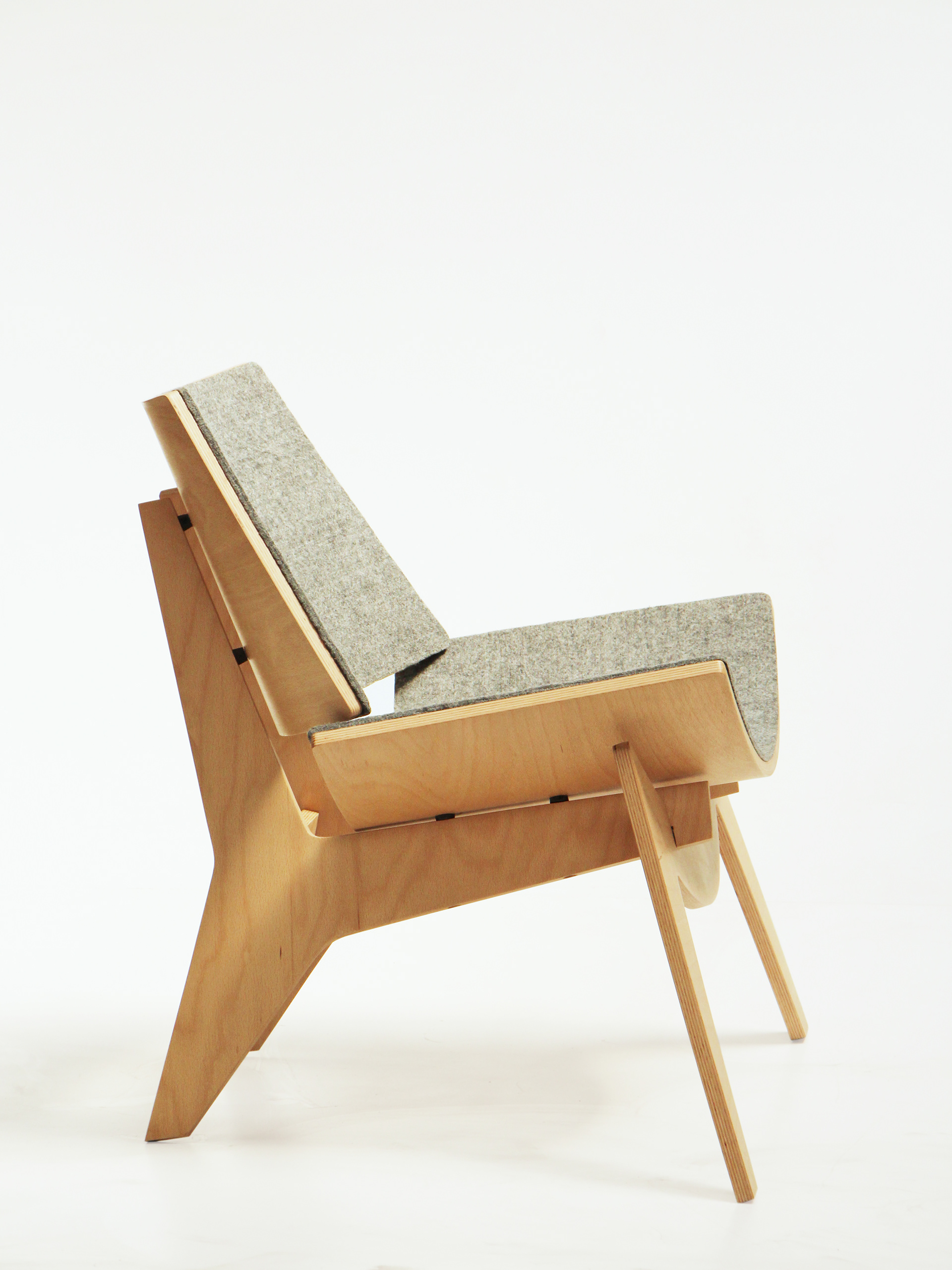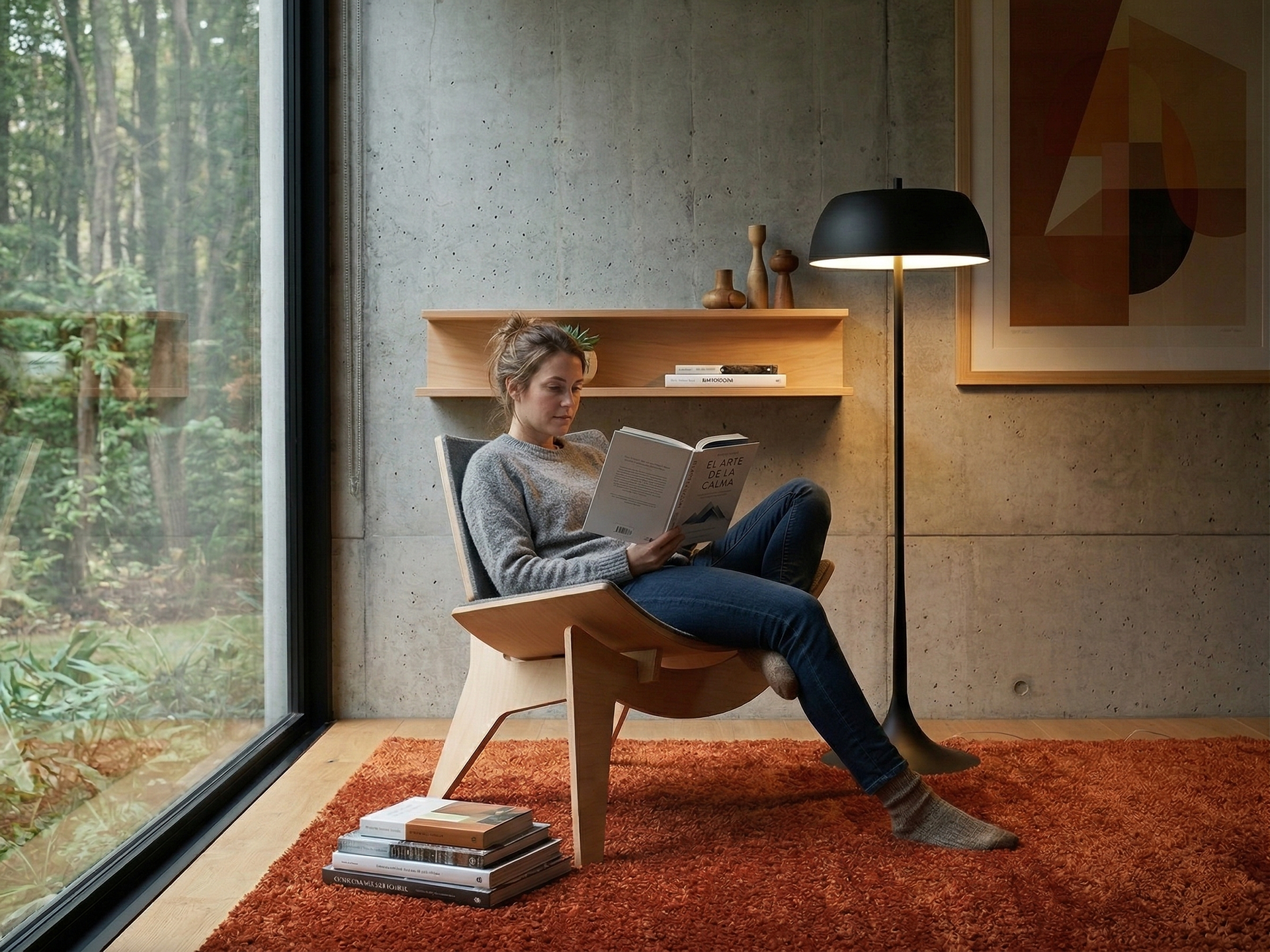
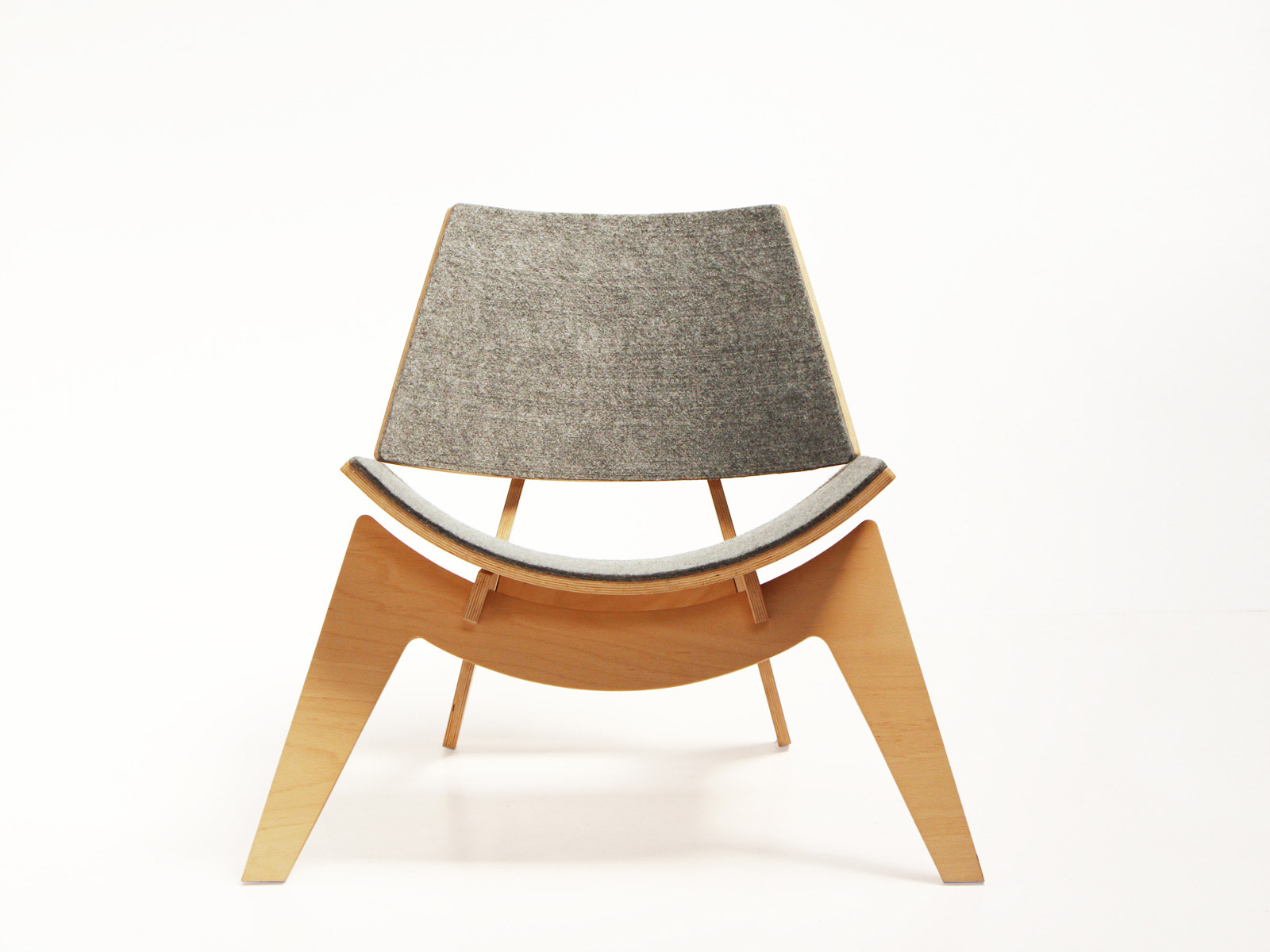
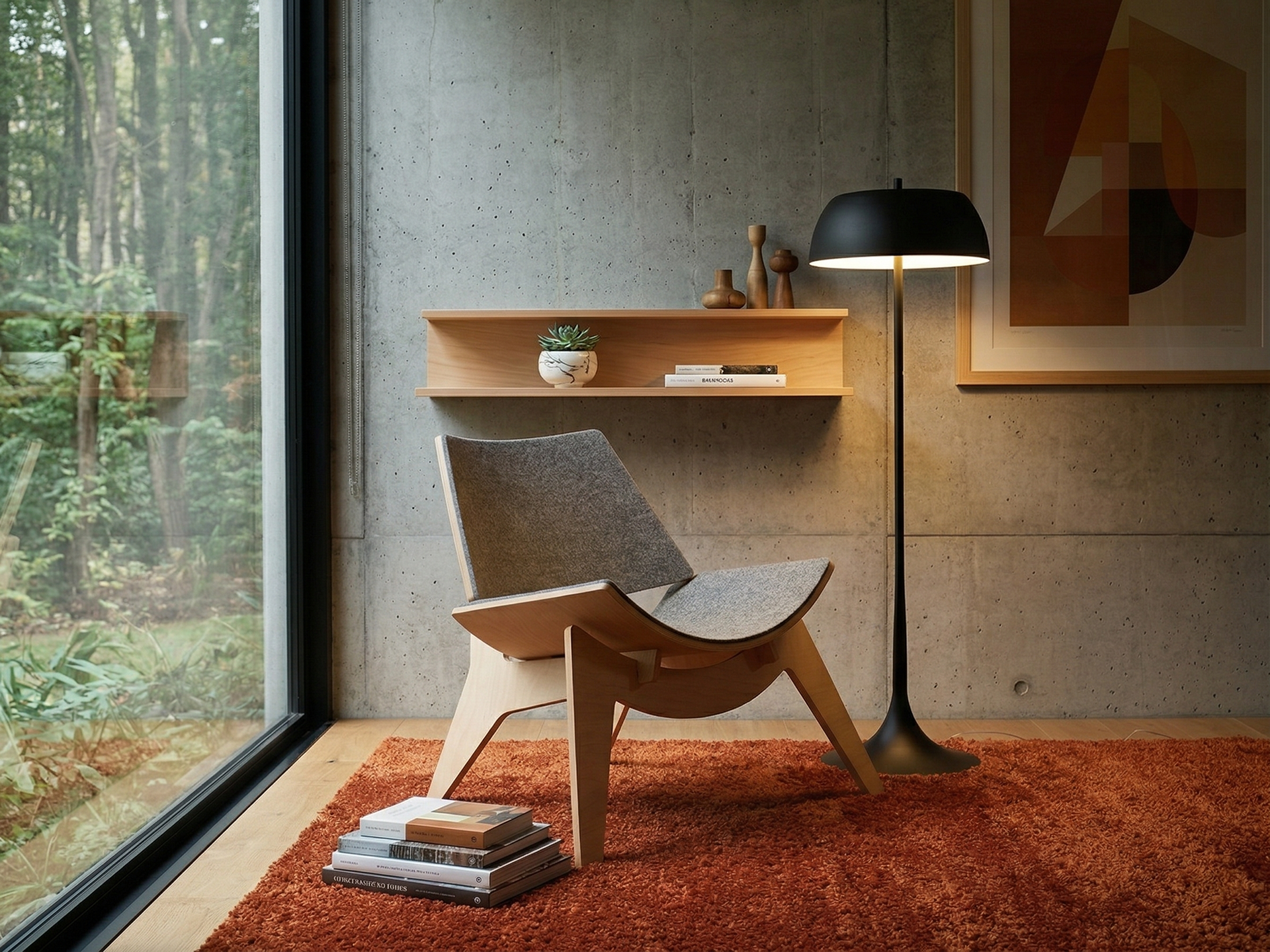
La Poltrona Gaia parte desde una idea clara: ofrecer una forma de descanso más cercana, más baja y más relajada. Su geometría responde a ese propósito sin excesos, a través de una superficie continua que une asiento y respaldo en un solo gesto.
Esa continuidad no es solo formal. Permite que el cuerpo encuentre una posición natural, sin rigidez, donde sentarse se vuelve un acto más intuitivo que dirigido. La inclinación y la altura trabajan juntas para generar una postura cómoda, pensada para detenerse un momento, leer o simplemente estar.
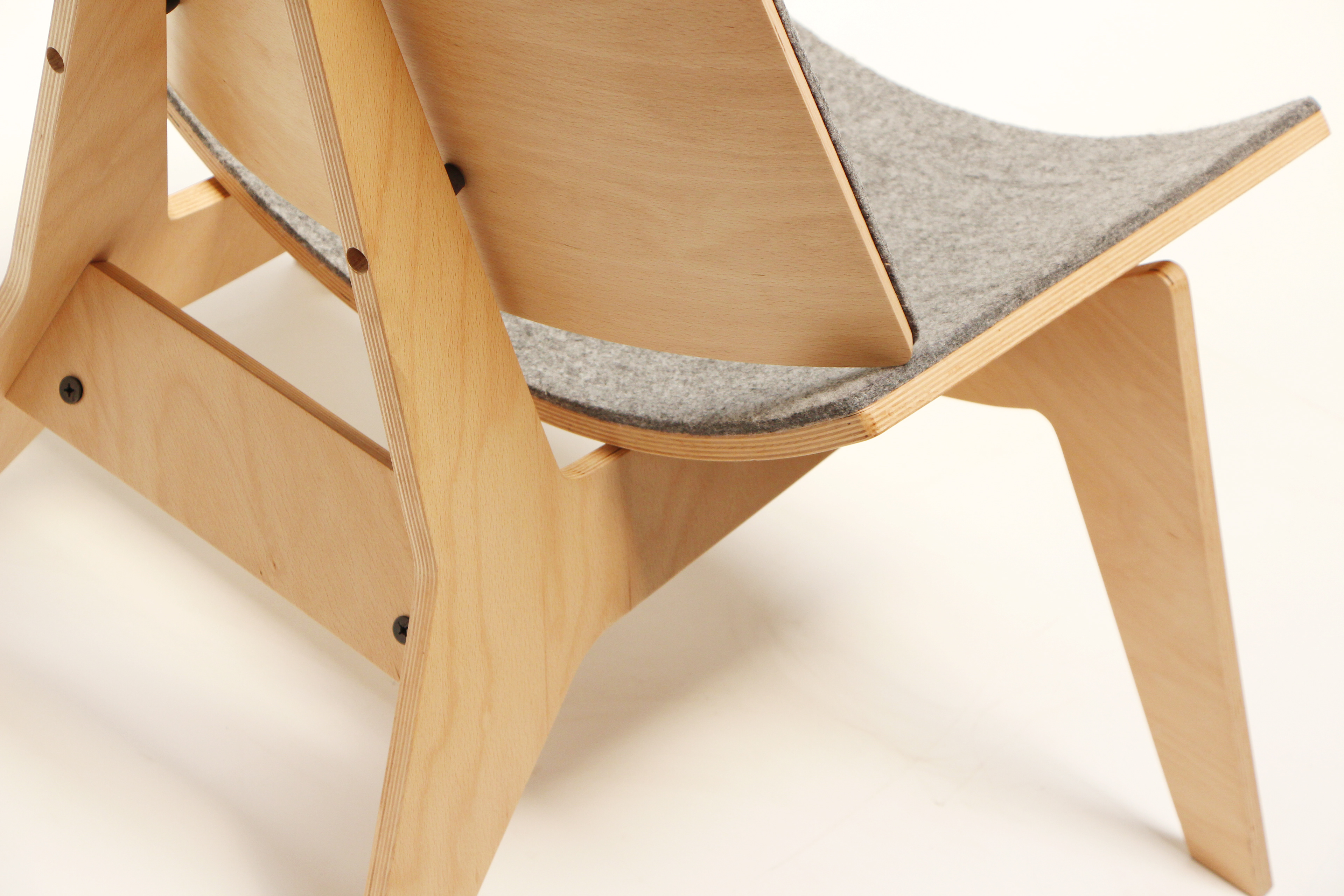
La estructura, en madera laminada de haya, se presenta de forma directa. Este material no solo define la resistencia y durabilidad de la pieza, también aporta un carácter particular: una calidez contenida, una veta suave que acompaña las curvas y refuerza la sensación de cercanía. La haya tiene algo silencioso, casi neutro, que permite que la forma se exprese sin distracciones, pero al mismo tiempo le da al objeto una presencia honesta y tangible.
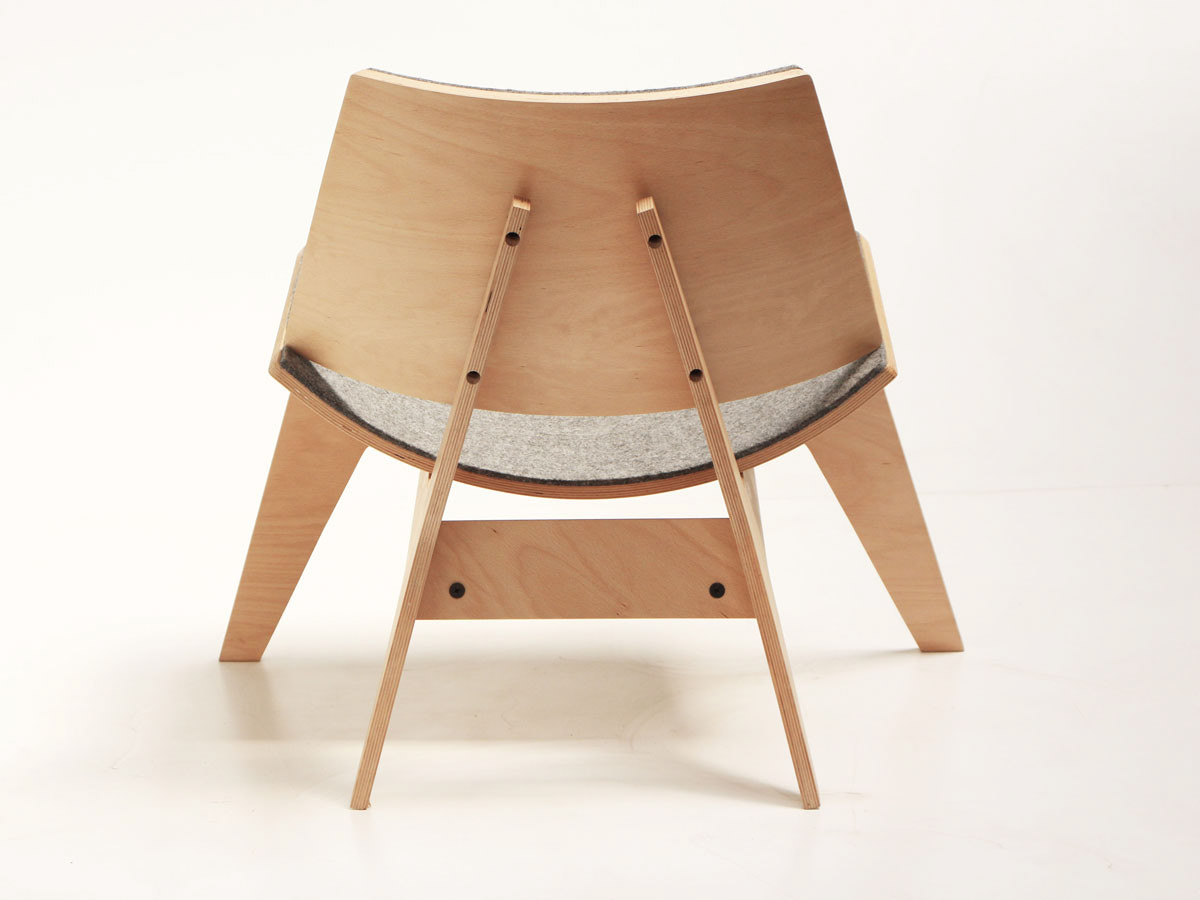
Cada pieza cumple un rol específico y visible, sin ocultar su función. Los apoyos rectos organizan el conjunto y sostienen las superficies curvas, generando un equilibrio claro entre estabilidad y ligereza visual.
El uso de fieltro industrial en las zonas de contacto introduce una capa de confort sin alterar la lógica constructiva. Su textura suaviza la experiencia y contrasta con la precisión de la madera, aportando calidez sin recargar la pieza.
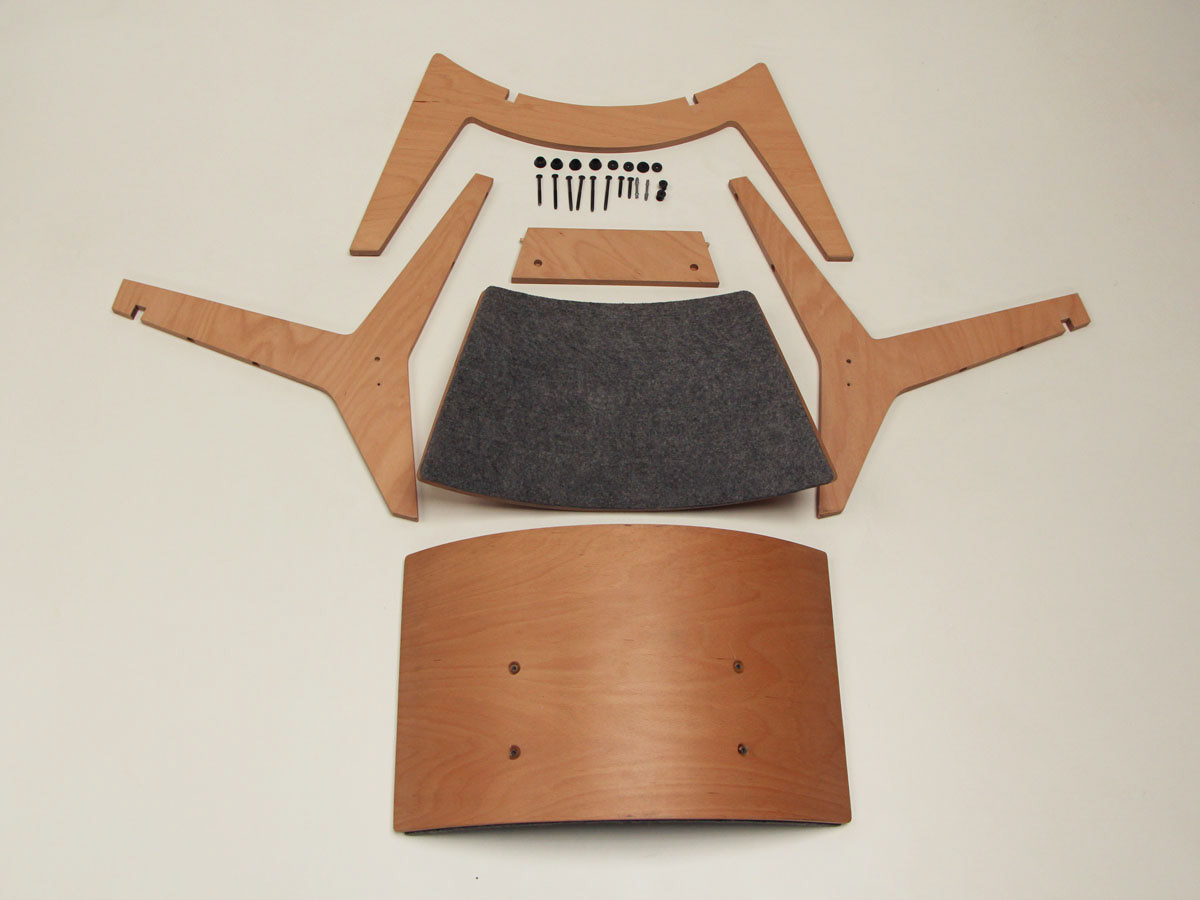
Gaia es desmontable, lo que refuerza su carácter práctico y honesto. No busca imponerse como objeto, sino integrarse desde una presencia tranquila, donde la forma, la estructura y el uso se resuelven de manera coherente.
En conjunto, es una pieza que pone el foco en lo esencial: una relación directa entre cuerpo, material y estructura, donde la madera no es solo soporte, sino parte activa del carácter y la experiencia.
The Gaia Armchair begins with a clear intention: to offer a more grounded, lower, and relaxed way of sitting. Its geometry responds to this idea without excess, through a continuous surface that brings seat and backrest together in a single gesture.
This continuity is not merely formal. It allows the body to settle into a natural position, free from rigidity, where sitting feels intuitive rather than prescribed. The angle and height work together to create a posture suited to pausing—reading, observing, or simply being.
The structure, made of laminated beech wood, is presented with clarity. This material does more than provide strength and durability; it also lends a distinct character to the piece. There is a quiet warmth in the beech, a subtle grain that follows the curves and reinforces a sense of closeness. It carries a certain neutrality that lets the form speak without distraction, while still giving the object a tangible, honest presence.
Each element has a visible and specific role. The straight supports organize the structure and hold the curved surfaces in place, creating a balance between stability and visual lightness.
Industrial felt is used on the contact surfaces, adding a layer of comfort without altering the constructive logic. Its texture softens the experience and contrasts with the precision of the wood, introducing warmth without adding unnecessary weight to the design.
Gaia is designed to be disassembled, reinforcing its practical and straightforward nature. It does not seek to dominate a space, but to integrate quietly, where form, structure, and use resolve themselves in a coherent way.
Overall, it is a piece focused on essentials: a direct relationship between body, material, and structure, where the wood is not just support, but an active part of the character and experience.