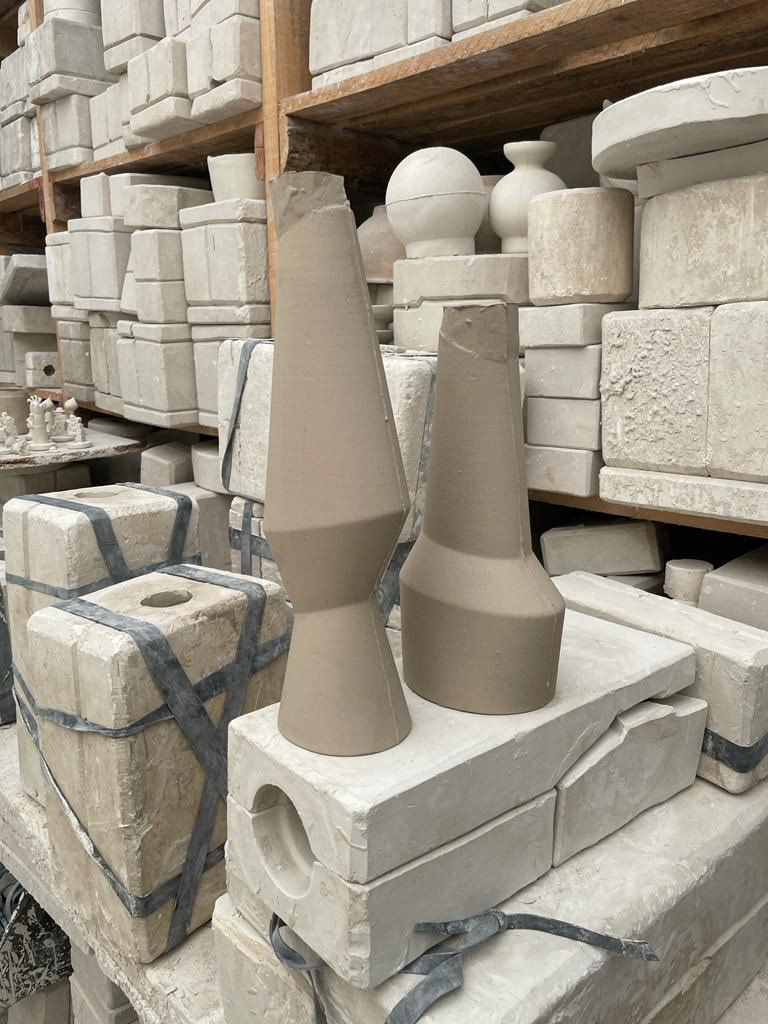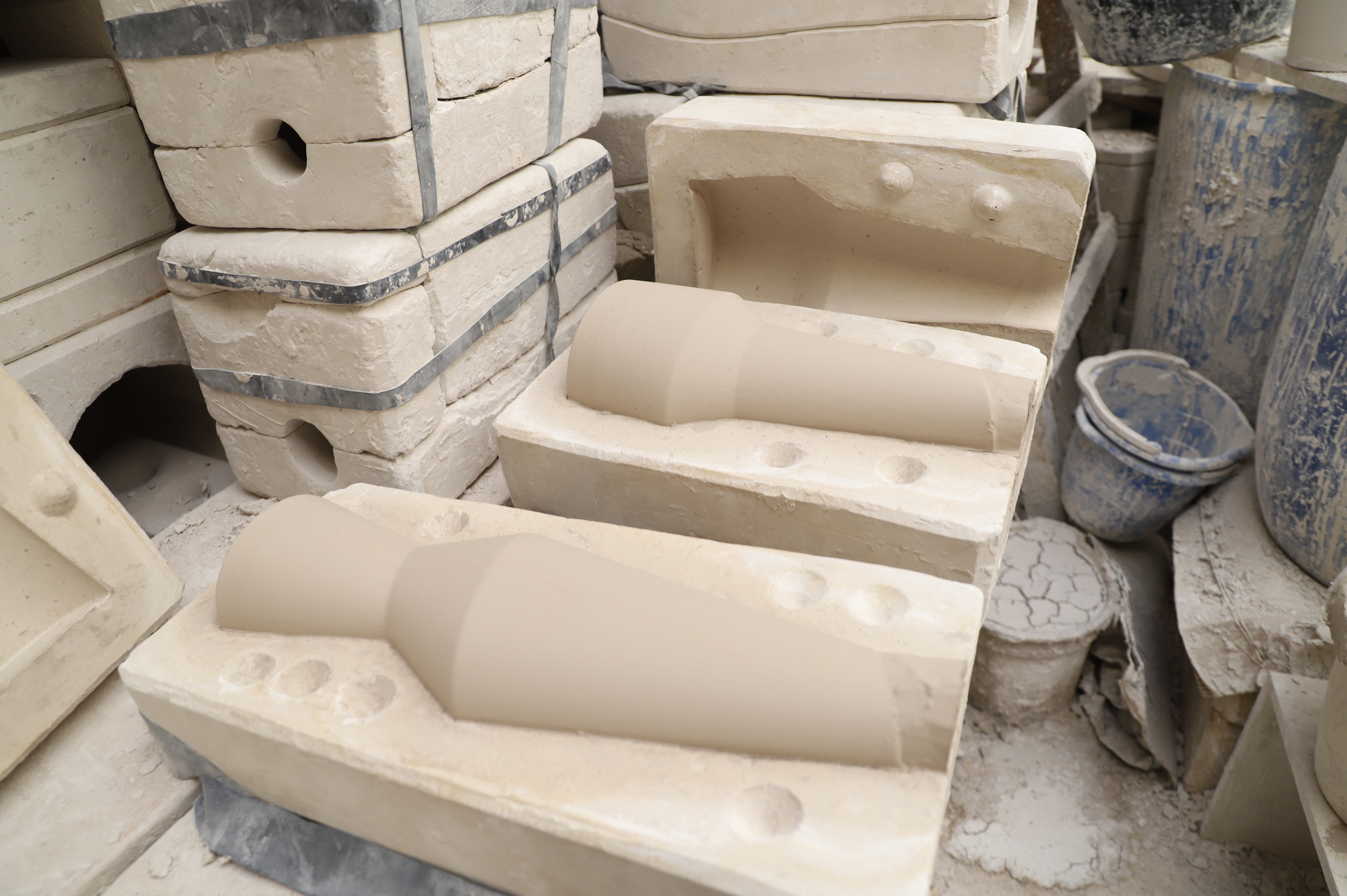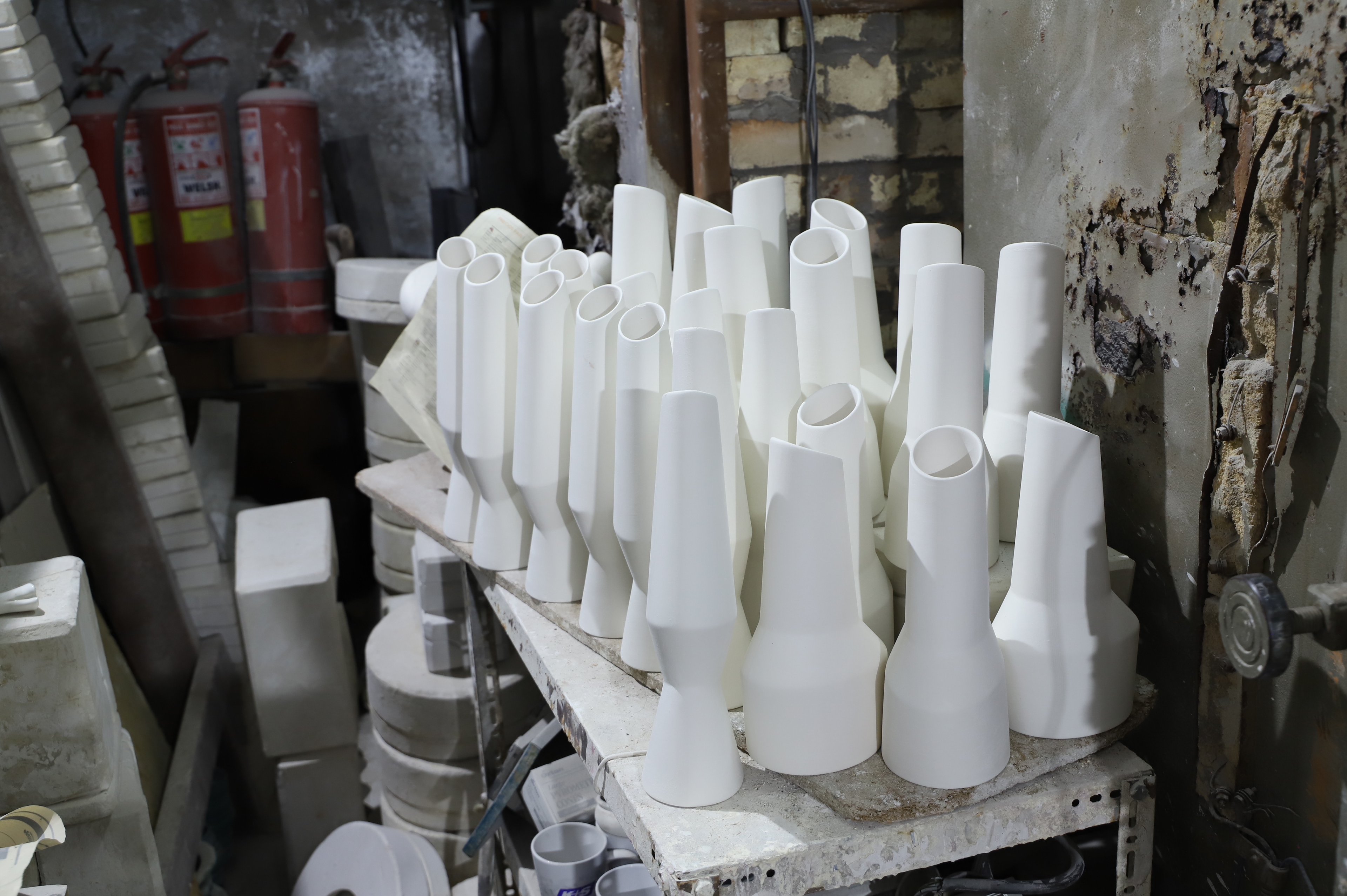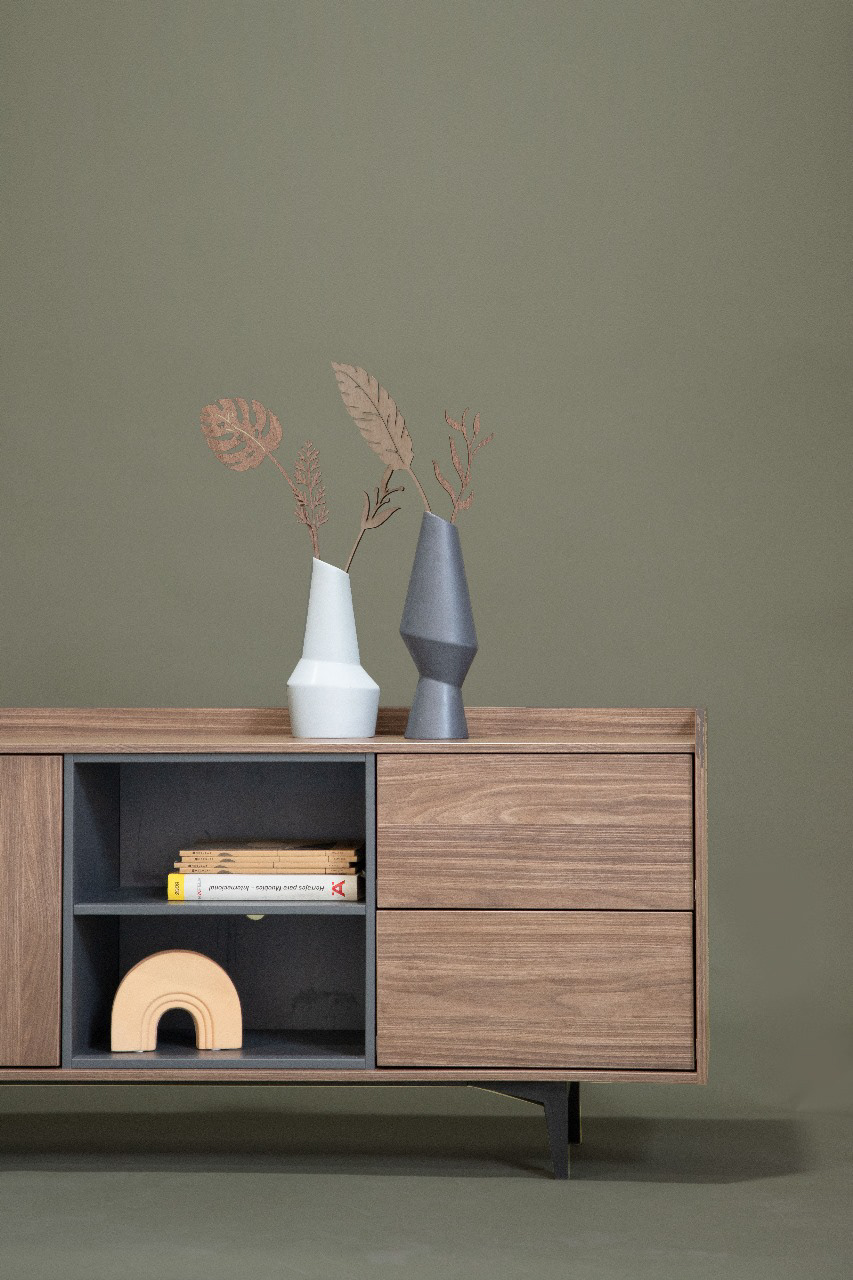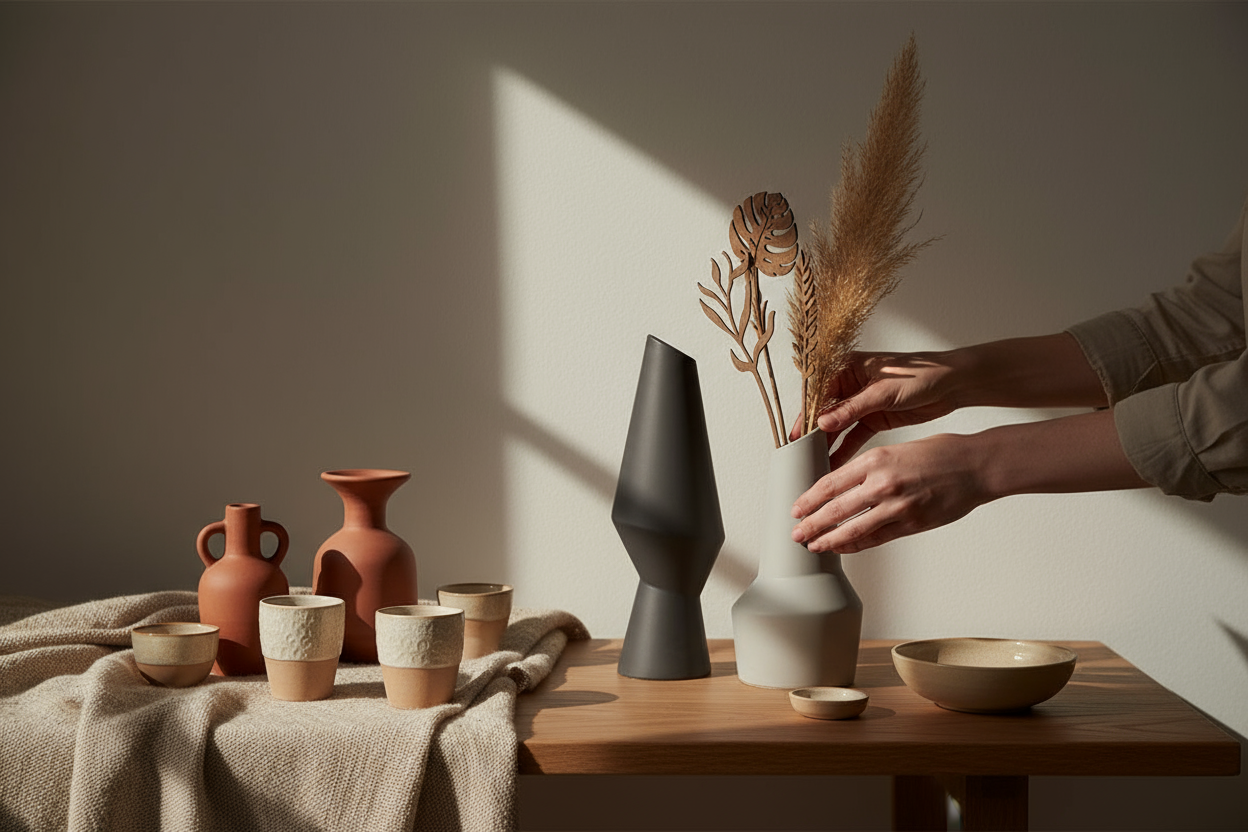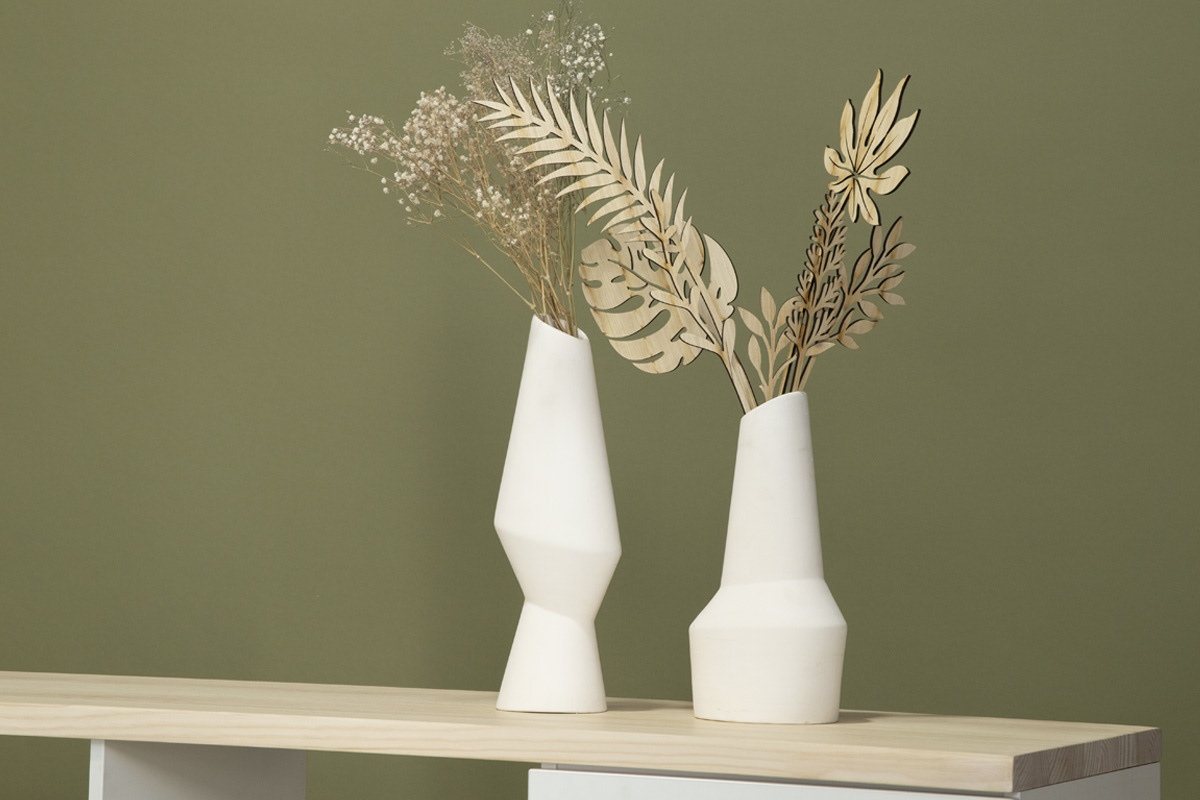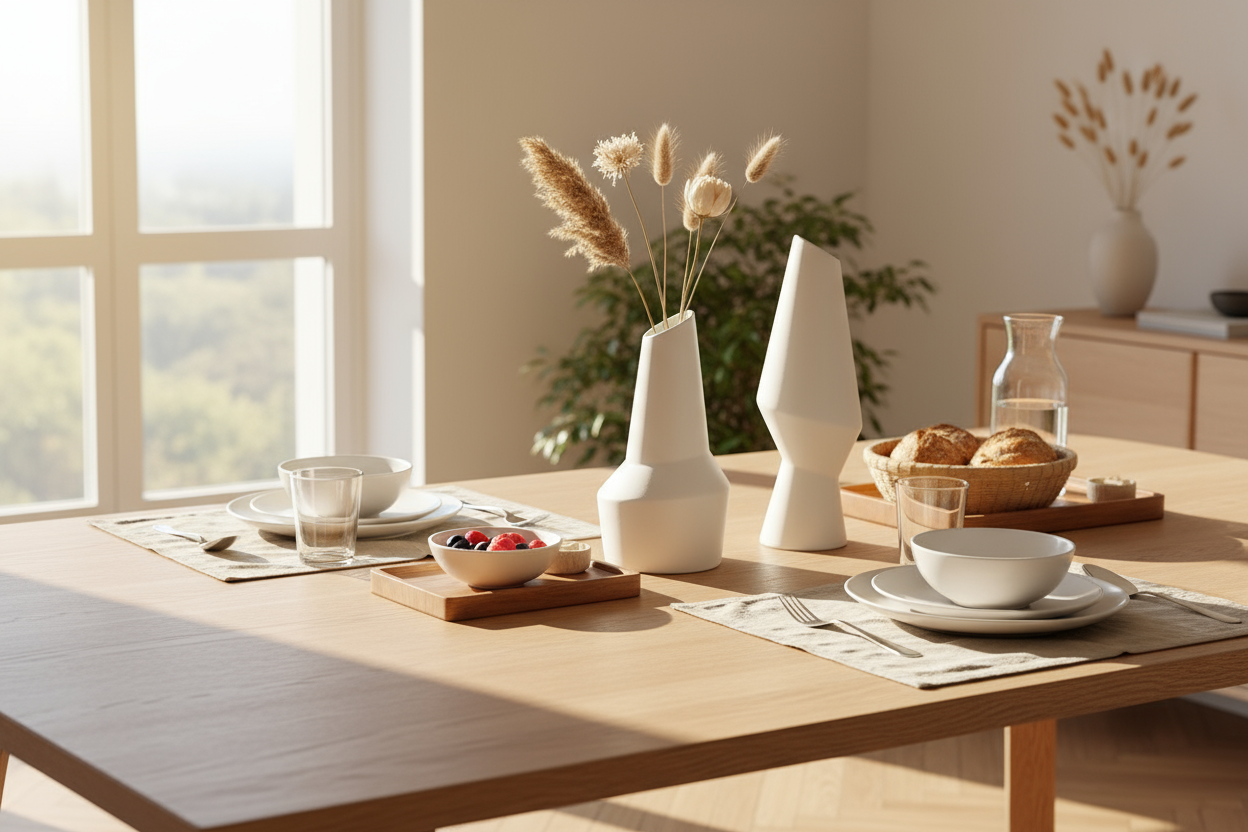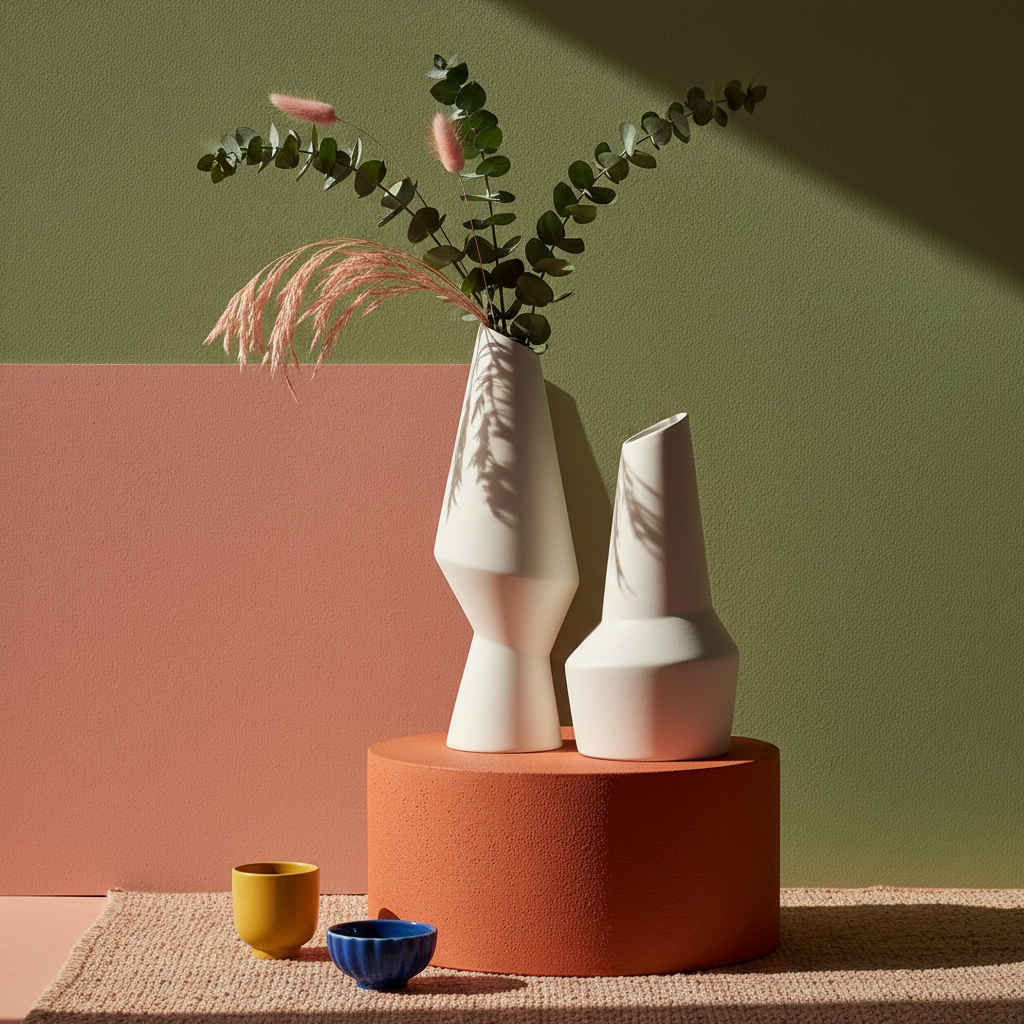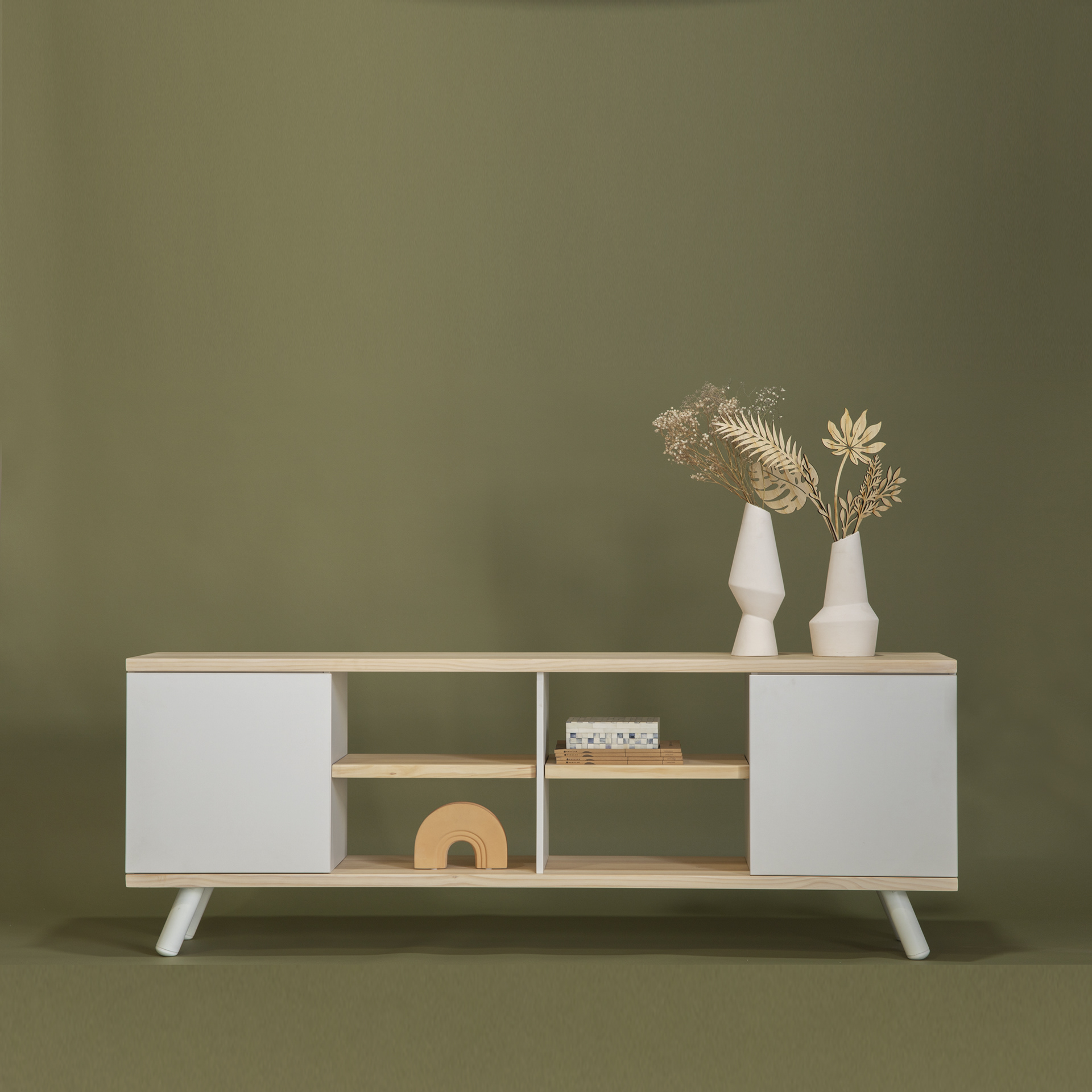
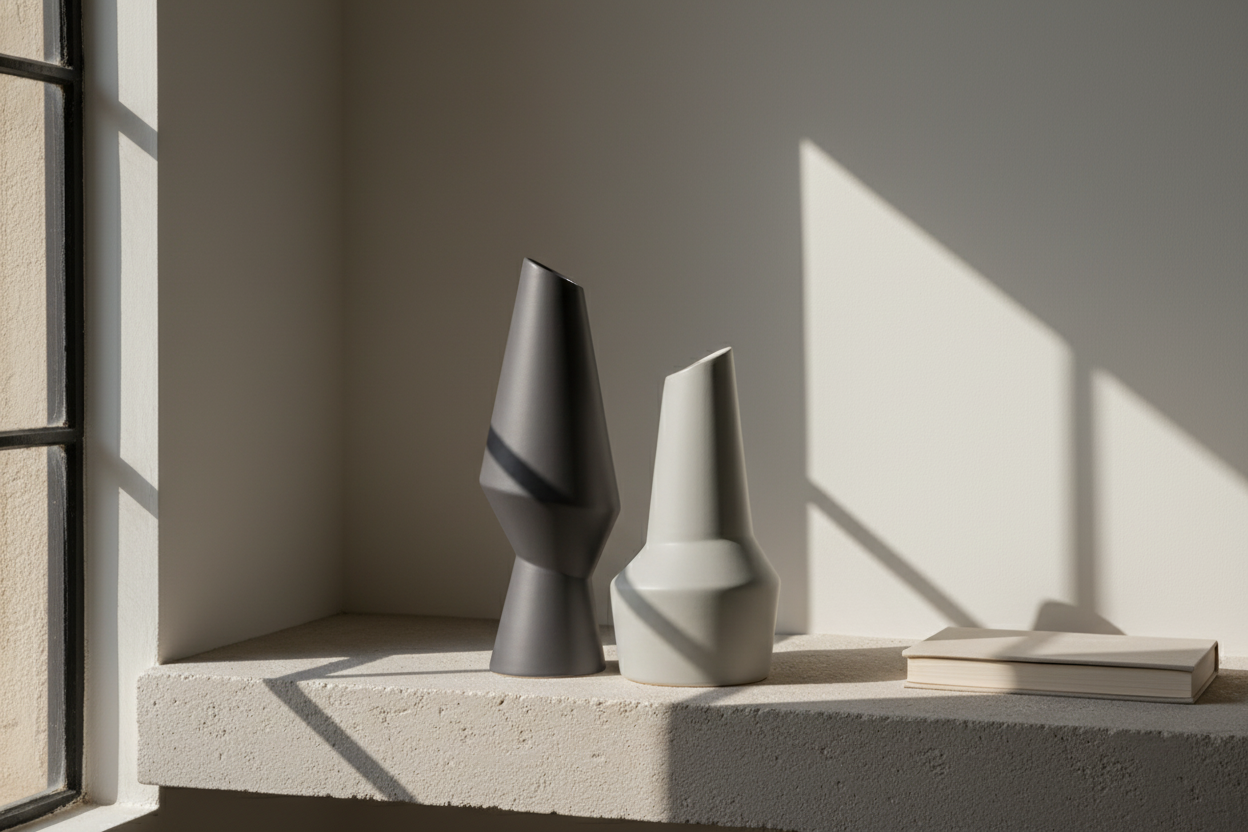
En apariencia, son dos objetos. Dos volúmenes contenidos, silenciosos, casi escultóricos. Pero al mirarlos con atención, se revela otra cosa: una relación.
Este set de jarrones —padre e hijo— no busca la simetría ni la perfección formal. Por el contrario, habita en el desvío. Sus cuerpos se inclinan, se quiebran suavemente, cambian de dirección como lo hacen las vidas cuando se cruzan y se afectan mutuamente. No hay una línea recta que los defina, sino una serie de decisiones, ajustes y aprendizajes que se van inscribiendo en su geometría.
El jarrón mayor no es un modelo rígido, ni el menor una réplica en escala. Ambos comparten un lenguaje, pero lo interpretan de manera distinta. En esa diferencia aparece el vínculo: una conversación silenciosa entre formas que se reconocen, se acompañan y, a veces, se contradicen.
Hay algo profundamente humano en esa asimetría. Porque la relación entre un padre y un hijo no es estática ni predecible; es un proceso en constante transformación. Un movimiento donde ambos cambian, se adaptan, ceden y vuelven a encontrar su eje. Aquí, ese gesto se traduce en curvas tensas, en aristas que no son abruptas sino conscientes, en una verticalidad que nunca es del todo estable.
Más que contener flores, estos jarrones contienen una narrativa. Son piezas que hablan del crecimiento, de la imperfección compartida y de la belleza que surge cuando dos trayectorias distintas aprenden a convivir.
En su quietud, hay historia. En su forma, hay afecto.
At first glance, they are simply two objects. Quiet, contained volumes—almost sculptural in their presence. But look closer, and something else emerges: a relationship.
This pair of vases—father and son—does not seek symmetry or formal perfection. Instead, it lives in deviation. Their bodies lean, subtly shift, and change direction, much like lives do when they intersect and influence one another. There is no single straight line defining them, but rather a series of decisions, adjustments, and learnings embedded into their geometry.
The larger vase is not a rigid model, nor is the smaller a scaled replica. They share a language, yet interpret it differently. Within that difference, the connection unfolds—a silent dialogue between forms that recognize each other, accompany one another, and occasionally resist.
There is something deeply human in that asymmetry. The relationship between a father and a son is neither fixed nor predictable; it is a continuous transformation. A movement where both evolve, adapt, yield, and rediscover their balance. Here, that gesture is translated into taut curves, edges that are intentional rather than abrupt, and a verticality that is never entirely stable.
More than vessels for flowers, these pieces carry a narrative. They speak of growth, of shared imperfection, and of the beauty that emerges when two distinct paths learn to coexist.
In their stillness, there is history. In their form, there is care.